Which perennials bloom all summer? Few bloom all summer, but many have long bloom seasons such as viola, coreopsis, Blue Buttery scabiosa, Stella de Oro daylily, and Aster x frikartii. All will bloom for about 12 weeks with regular deadheading. Mixing perennials with different bloom times will give your bed color all year long.
Can perennials be combined with annuals? Yes, annuals can be very useful in perennial beds while you are waiting for perennials to fill in. They are also useful in adding season long color in areas where perennials may have a shorter bloom period.
Which perennials thrive in shade? Hostas, Columbines, Astilbe, Helleborus, Bergenia, Bleeding heart, Primrose, Pulmonaria, Vinca, Anemones, plus many more.
What can I plant safely in my mountain garden? Plants classified Zone 2 or Zone 3 can be safely planted at high altitudes. In warmer or protected areas of your garden, Zone 4 plants are a possibility. Spring planting is preferable to fall for proper establishment of root systems. Plants to try: Columbines, Campanulas, Centaurea, Daylilies, Delphinium, Hostas, Peonies and Rudbeckia.
When do I know when it is time to divide my perennials? Some need division every three years, some every four or five years. Some need never be divided. When you see crowded growth and blooms seems to diminish it's usually time to divide.
What is the best time of the year to divide and/or transplant my perennials? Early blooming perennials are best divided in late summer or fall; late or fall blooming perennials divide best in the spring.
Should I cut my perennials back in the fall or spring? Generally it is a good idea to cut back dead foliage in the fall to prevent pest and disease organisms from wintering over in dead and decaying foliage. Some plants will retain upright form and provide winter interest to the garden.
Can I mulch my flower garden with leaves in the fall? Yes, you may want to shred the leaves with a mower for a neater look and better blending with soil. Avoid layering leaves so deeply that water can not penetrate the soil.
Why don't my perennials look as full and nice as those in catalog photographs? Is there something wrong? Newly planted perennials take about three years to mature to their full height and spread. Be patient.
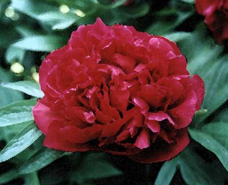 How do I plant
peonies? Peonies should be planted in a good soil rich in
organic material. Prepare a wide planting area rather than a deep one. The eyes
of the peony should sit about 1"-1 1/2" below the soil level. Don't expect much
bloom for one or two years. Peonies rarely need dividing and are very long
lived. Pick your site carefully and prepare soil well.
How do I plant
peonies? Peonies should be planted in a good soil rich in
organic material. Prepare a wide planting area rather than a deep one. The eyes
of the peony should sit about 1"-1 1/2" below the soil level. Don't expect much
bloom for one or two years. Peonies rarely need dividing and are very long
lived. Pick your site carefully and prepare soil well.
When is the best time to plant perennials? Generally, container grown perennials can safely be planted in the metro area following May 1st and continuing through the fall depending on the variability of the weather conditions from year to year. Some hardy varieties may be planted in late March and April, again depending on the weather pattern.
Will late snow hurt my perennials that have started to emerge? Generally speaking, plants come out of dormancy as weather permits them. Occasionally, they may find themselves buried in the late snow. Broken stems and frozen blooms may result. Prune back broken or frozen areas and they will recover.
What should I do when my perennials stop blooming? Generally, you should prune back the stems which will give the plant a cleaner neater appearance. It may also encourage it to rebloom. Continue maintaining the foliage to promote the health of the plant and wait for the following years show. Consider attractive foliage as much as you do beautiful bloom.
Are perennials easier to grow than annuals? They present different challenges to gardeners. Many will live many years with little or no maintenance, other will require a watchful eye for division, or better location. Because they remain in the garden for more than one season, they are often more rewarding to the gardener for his or her efforts towards them.
What should I do following a devastating hailstorm? Carefully clean debris out of the garden and cut back damaged plants. Hail will often severely compact the soil, so it needs to be cultivated carefully and some organic material lightly amended into it. Avoid any application of fertilizer until plants are once again showing signs of renewed growth. Be patient: the garden will renew itself.
What causes powdery mildew? Powdery mildew is a fungus common in late summer with our cool nights and warm days. It may also attack when foliage is excessively wet or plants are over crowded preventing air circulation. Avoid overhead sprinkling and space your plants properly. Fungicide applications are only effective as a preventive measure. They are of limited value once an outbreak has occurred.
How should I mulch my perennials? Shredded cedar mulch or mini nuggets are great mulches. Spread about 3" deep. Avoid mulching too close to crowns of plants to avoid crown rot. Peat moss and compost are best as amendments. Used as a mulch, they may form a crust which prevents water from penetrating the soil.
How should I fertilize my perennials? Early in the season, following a light cultivation, a general application of a well balanced fertilizer like ProRich Rose & Perennial Food is usually adequate. An additional application in the middle of the growing season will help long and late blooming perennials look their best.
When is the best time to divide iris? Usually in late July or early August.
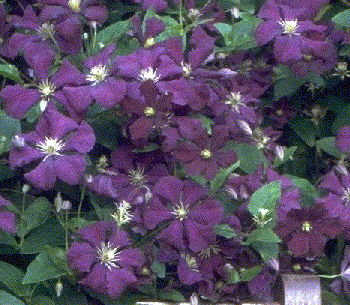 How
do I prune my clematis vine?
There are three different types of clematis that need to be pruned differently. See this table for a list of varieties and how they should be pruned.
How
do I prune my clematis vine?
There are three different types of clematis that need to be pruned differently. See this table for a list of varieties and how they should be pruned.